
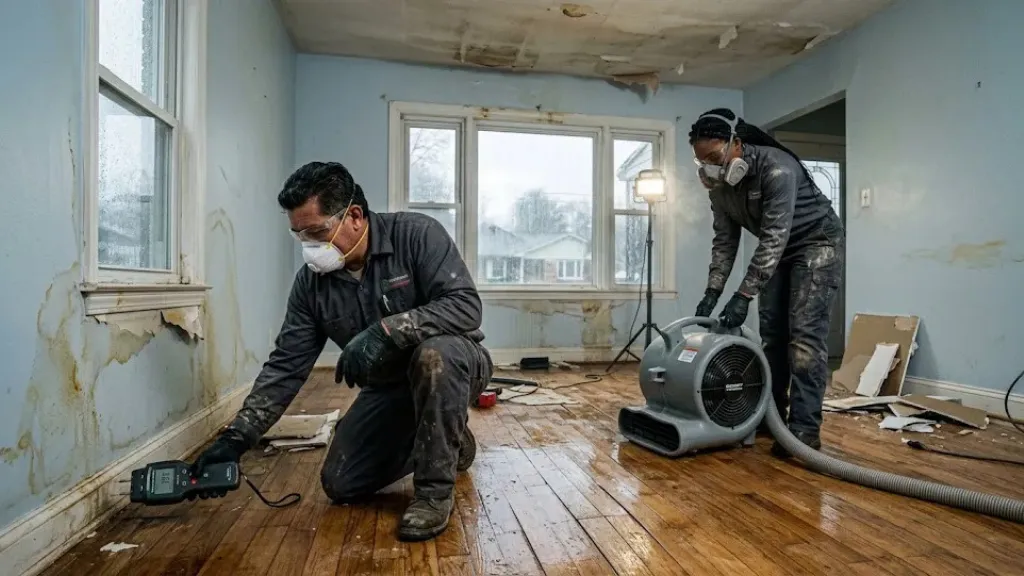
Subsurface water accumulation across Will County residential properties is driven primarily by regional ground conditions, low-elevation drainage channels, and intense rainfall patterns. Silty clay glacial till forms the primary subsoil layer across eastern and northern sectors of the county. Because clay earth resists quick percolation, severe cloudbursts and rapid spring thaws create significant surface runoff across the DuPage River, Des Plaines River, and Lily Cache Creek drainage basins.
As regional waterways swell during prolonged storms, groundwater levels rise against concrete foundation footings. Lateral hydrostatic pressure forces water through slab expansion joints, unsealed wall penetrations, and structural micro-cracks. Homeowners seeking Bolingbrook water damage restoration services frequently report groundwater intrusion issues under these exact heavy rainfall conditions.
Will County Soil Mechanics & Environmental Risk Factors
Establishing a reliable water exclusion strategy requires understanding the specific environmental forces acting on subterranean structures across Will County.
Saturated Clay Expansion
The dense clay subsoil common throughout the county absorbs water slowly and retains moisture for extended periods. When fully saturated, expanding clay exerts continuous lateral force against buried basement walls, driving moisture through unsealed masonry seams and foundation cold joints.
Watershed Proximity & Elevation
Properties located near local swales or major river floodplains encounter elevated water tables when seasonal storms surge through regional tributaries. High river stages restrict natural stormwater discharge, causing standing water to collect in low-lying residential yards.
Subsurface Freeze-Thaw Cycles
Northern Illinois winters bring repeated freeze-thaw sequences that shift foundation soils. Moisture trapped against buried foundation walls freezes and expands, widening hairline cracks in poured concrete and degrading exterior damp-proofing layers over time.
Mainline Sewer Backups
During intense precipitation events, municipal collection lines can reach full liquid capacity. Rising pressure within main sewer pipes can push wastewater backward through lower-level floor drains and plumbing fixtures in established subdivisions.
Mechanical Drainage & Structural Defense Systems
Protecting a lower level from water intrusion requires combining proper exterior surface grading with reliable perimeter collection and discharge equipment.
| System Component | Mechanical & Engineering Role | Inspection Schedule |
| Primary Sump Pump | Collects perimeter tile groundwater and evacuates it clear of foundation walls. | Bi-annually (Spring and Autumn) |
| Battery Backup Pump | Operates automatically during power disruptions or primary pump failure. | Test monthly; replace battery every 3-5 years |
| Sewer Backwater Valve | Mechanical check valve preventing municipal sewer lines from backing into house drains. | Annual professional cleaning and check |
| Exterior French Drain | Intercepts surface runoff and redirects flow away from foundation footings. | Annual clearance of sediment and debris |
| Window Well Covers | Polycarbonate shields preventing direct rain accumulation and leaf buildup in well basins. | Quarterly clearance of debris |
Property owners interested in checking official drainage standards and county flood management projects can review resources through the Will County Land Use Department.
Actionable Steps for Basement Flood Prevention
Following a structured maintenance plan helps manage moisture threats before severe weather causes interior structural damage.
1. Maintain Exterior Yard Grade
Ensure soil surrounding foundation walls slopes downward at a minimum drop of 6 inches over the first 10 feet. Fill settled low spots along concrete walls with compacted clay topsoil to prevent water from pooling near the structure.
2. Extend Downspout Discharge Lines
Attach rigid downspout extensions that discharge roof runoff at least 6 to 10 feet away from basement walls. Direct discharge toward permeable lawn areas sloped away from foundation footings.
3. Inspect Primary Sump Equipment
Pour water into the sump pit prior to spring rain periods to verify the float switch triggers without sticking. Check the inline check valve to confirm pumped water cannot flow back into the pit after the cycle stops.
4. Install Redundant Battery Backups
Equip primary electric sump pumps with a dedicated battery-backed secondary unit. Convective summer storms across Will County frequently cause utility power disruptions when groundwater volume in the pit is at its highest.
5. Evaluate Subsurface Sealing Solutions
For structures experiencing persistent moisture seepage along wall seams or floor slabs, explore long-term remedies for basement flooding in Bolingbrook to relieve continuous hydrostatic pressure.
6. Clear Window Well Drainage
Remove leaves, soil, and debris from window well basins. Ensure underlying gravel layers remain loose so water can drain down to perimeter tile lines without pooling against basement window frames.
7. Manage Sump Overflows Immediately
If a mechanical malfunction or extended outage causes pit water to breach the basin, arrange prompt sump pump failure emergency cleanup to extract standing water and dry structural framing.
8. Install Sewer Backwater Check Valves
Have a licensed plumber install a mainline backwater valve along your main waste line to protect lower-level plumbing fixtures from municipal surcharges during heavy rainstorms.
Response Protocol for Active Basement Flooding
When severe storms or mechanical equipment failures breach basement defenses, taking organized action limits long-term structural issues:
- Prioritize Electrical Safety: Never step into standing water until electrical power to the lower level is turned off at the main breaker panel or disconnected by the electric company.
- Treat Standing Water as Contaminated: Water originating from floor drains or backup sewers carries biological contaminants. Wear heavy rubber boots, protective gloves, and eye protection during initial checks.
- Begin Water Extraction Quickly: Remove standing water within 24 to 48 hours using industrial extraction gear to minimize framing damage and prevent mold growth.
- Connect with Local Response Networks: When facing sudden lower-level flooding, property owners can connect with a local Will County response network to arrange fast extraction, structural drying, and sanitization through an emergency water damage restoration referral provider.