24/7 Water Damage Restoration & Flood Cleanup Bolingbrook, IL
Fast emergency water removal, basement flood cleanup, and structural drying across Will and DuPage County.
Water moves fast, and structural damage follows quickly behind it. Whether it’s a burst pipe off Boughton Road, a sump pump overflow near Winston Woods, or drainage backing up near the East Branch DuPage River, waiting is not an option. Our service connects you with 24/7 local water restoration contractors in Bolingbrook to help extract water, dry out your property, and protect your foundation, subfloors, and drywall.

Fast Connection to Local Water Restoration Experts
Trusted Local Restoration connects property owners with independent, local restoration specialists equipped for rapid water extraction and structural drying. Local response partners focus on rapid response times across all Bolingbrook neighborhoods, from Weber Road down to Lily Cache Creek.
✅ 24/7 Availability
✅ Rapid Response Network
✅ Independent Local Specialists
✅ Free Connection to an Expert
Independent Referral Network • Direct Insurance Billing Support • 24/7 Emergency Response
Specialized Water Damage Restoration Services in Bolingbrook IL
Direct Insurance Claims Processing & Documentation
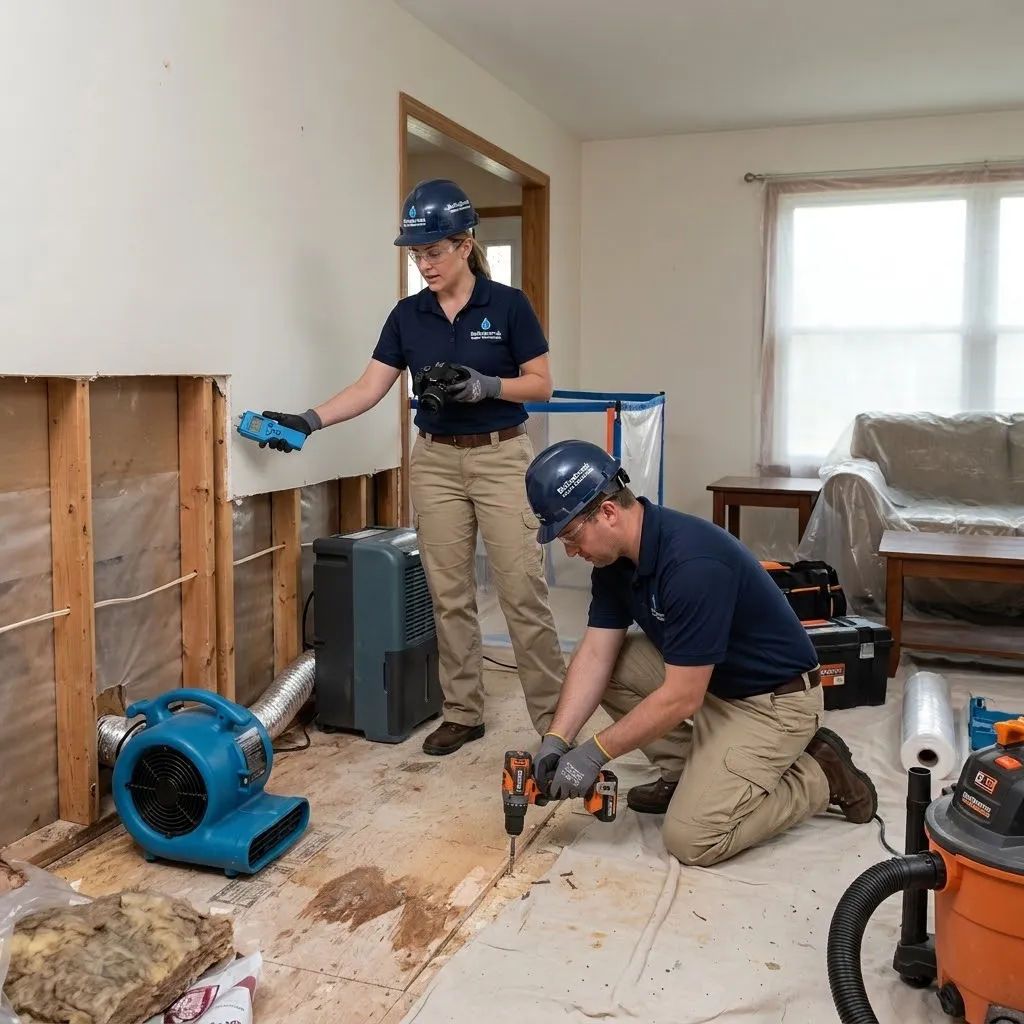
Navigating property insurance after severe water infiltration can be overwhelming. Local response partners assist property owners throughout Bolingbrook by providing comprehensive structural loss documentation. Technicians capture detailed thermal imagery scans, map moisture boundaries, and record daily psychrometric drying logs required by major adjusters. Moisture readings are mapped directly into Xactimate, the industry standard estimating software used by State Farm, Allstate, Farmers, and Liberty Mutual. This ensures your emergency mitigation claims are processed efficiently without out-of-pocket friction.
Industry-Standard Structural Restoration (IICRC S500)
Water damage restoration requires immediate, scientific intervention to prevent secondary structural losses and toxic mold amplification. On-call response specialists operate in strict compliance with IICRC S500 standards for professional water damage restoration. Whether managing clean Category 1 supply-line bursts or heavily contaminated Category 3 grey/black water events from localized sewer backups, crews establish immediate containment zones. Using industrial HEPA air scrubbers, heavy-duty LGR dehumidification systems, and EPA-registered botanical disinfectants, responding teams restore safe indoor air quality while protecting structural framing, subflooring, and ceiling joists.
24/7 Emergency Water Extraction & Cleanup Near You
Complete Basement Flood Cleanup & Water Removal for Bolingbrook Properties
Bolingbrook’s heavy clay soil and seasonal downpours along the I-55 corridor create severe hydrostatic pressure against basement walls. In established subdivisions like Colonial Village and Fernwood, this frequently leads to foundation seepage, backup drains, and flooded basements. To deliver complete structural recovery, responding contractors manage everything from clean plumbing leaks to severe sump pump overflow events using strict IICRC S500 industry standards. To learn more about standard response protocols and service options across Illinois, view our main water damage restoration and cleanup overview.
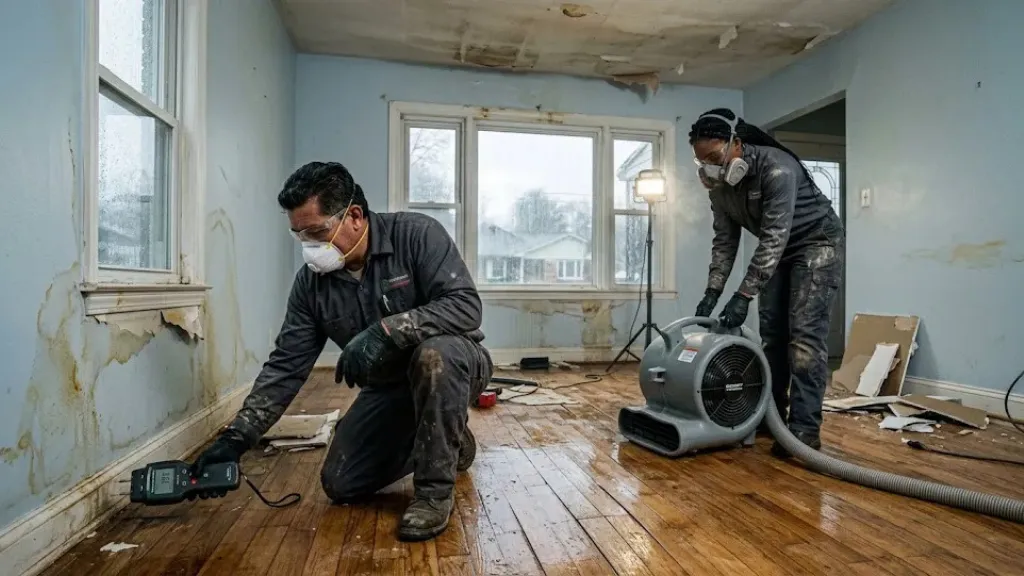
- Thermal Imaging Moisture Inspections: Technicians use FLIR infrared cameras during initial assessment to pinpoint trapped moisture behind drywall, baseboards, and under subfloors without tearing structures apart unnecessarily.
- High-Capacity Emergency Water Removal: Submersible trash pumps and truck-mounted extraction units perform rapid liquid removal, setting the stage for thorough structural drying.
- Psychrometric Drying Equipment: Placement of LGR (Low Grain Refrigerant) dehumidifiers and high-velocity air movers balances humidity levels, essential for long-term structural preservation and mold prevention.
- Antimicrobial Sanitization: EPA-registered biocides treat affected materials to eliminate bacteria from drain backups and prevent toxic growth after a basement flood cleanup.
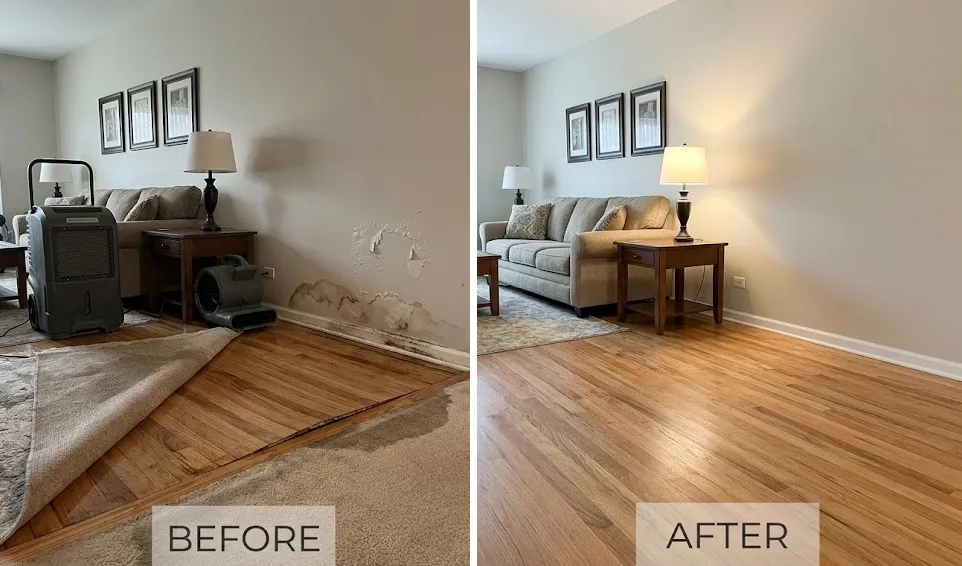
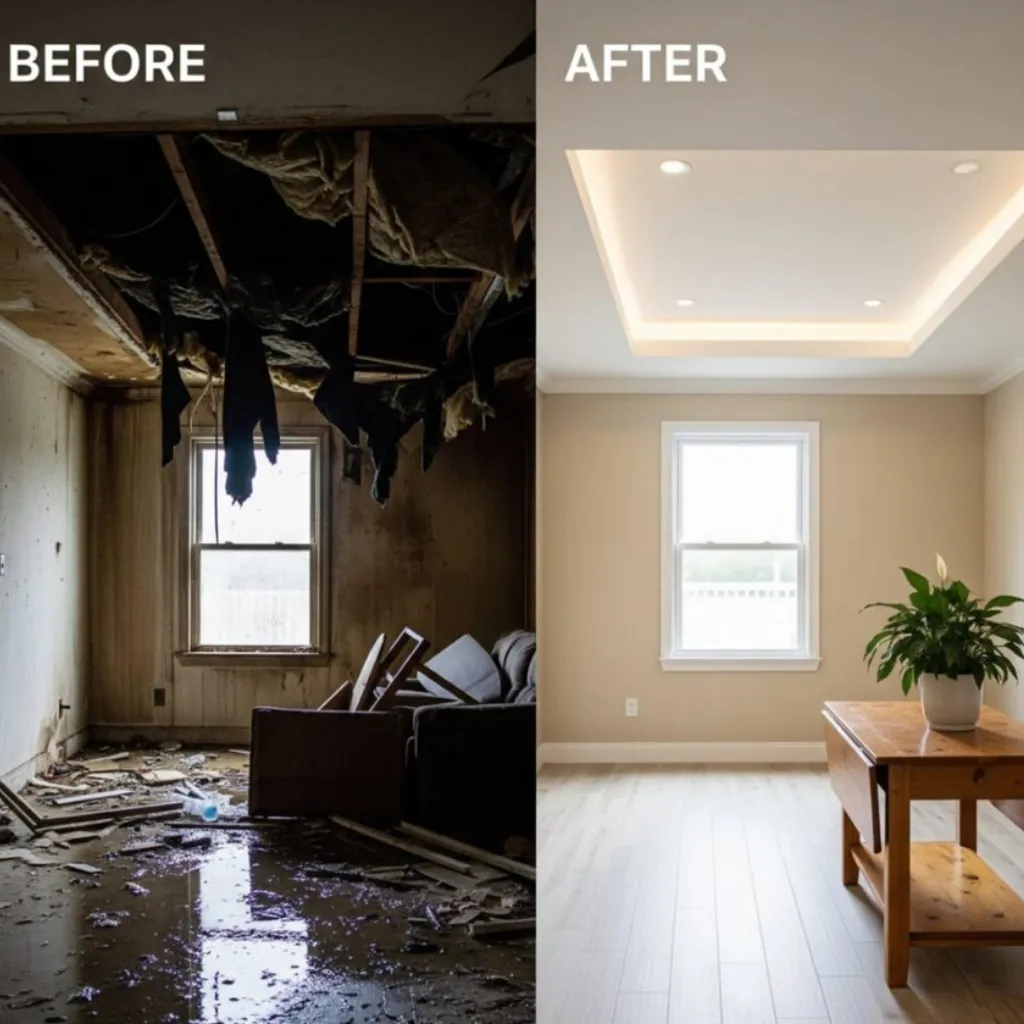
- Restoration & Repairs: Damaged drywall, flooring, and other materials are repaired or replaced. The goal is to help return your home or business to pre-loss condition quickly and efficiently.
With the right equipment and training, these teams go far beyond what shop vacs and fans can achieve to minimize property damage.
Seasonal Water & Drainage Hazards Facing Bolingbrook Properties
Northern Illinois weather patterns combine with local Will/DuPage soil conditions to create distinct property risks throughout the year:
Sub-Zero Arctic Blasts & Frozen Supply Lines: Deep winter freeze snaps cause uninsulated water supply lines in exterior walls or unconditioned crawlspaces to freeze, expand, and rupture, resulting in severe high-pressure flooding upon thawing.
Late-Winter Freeze/Thaw & Rapid Snowmelt: Rapid mid-winter thaws melt heavy snowpacks faster than Bolingbrook’s dense clay soils can absorb. Water pools around slab foundations, creating extreme hydrostatic pressure that forces groundwater through floor cracks, window wells, and foundation seams.
Spring Severe Storms & Sewer Surcharges: Intense spring downpours routinely overload municipal drainage infrastructure near Lily Cache Creek and the East Branch DuPage River, causing sewer line surcharges and category 3 backups through basement floor drains.
Why Homes in Bolingbrook, IL Face Severe Flooding Risks
1. High-Density Clay Soil & Hydrostatic Pressure
Bolingbrook is built on heavy, dense glacial clay soil. Clay acts like a sponge that saturates quickly and drains extremely slowly. During heavy downpours or rapid mid-winter thaws, rainwater cannot absorb into the ground, causing groundwater levels to spike. This creates massive hydrostatic pressure against basement foundations, forcing water through floor cracks, tie-rod holes, and cove joints (where the wall meets the floor).
2. Local River Basins & Surface Water Runoff
The village sits within the watersheds of the East Branch DuPage River and Lily Cache Creek. During intense spring rainstorms, these natural waterways crest and spill into adjacent low-lying subdivisions. Overflowing waterways cause severe overland flooding that pools around foundations and window wells.
3. Rapid Development & Impervious Surfaces
Bolingbrook’s rapid residential expansion over recent decades converted acres of open farmland into paved roads, rooftops, driveways, and concrete patios. These non-porous surfaces prevent rainwater from naturally filtering into the ground, instead creating massive surface runoff that routes straight toward residential yards and overburdens storm infrastructure.
4. Sump Pump Overload & Power Outages
Because of the area’s soil conditions, almost every home in Bolingbrook with a basement relies heavily on a sump pump. However, the severe thunderstorms that bring heavy rainfall are the same storms that cause neighborhood power outages. Without a working battery backup system, primary sump pumps fail right when groundwater accumulation is at its peak.
5. Sump Pump and Sanitary Sewer Backups
During torrential downpours, municipal storm drains and sewer mainlines become surcharged with high volumes of stormwater. When municipal systems reach capacity, water has nowhere to go and pushes backward through residential main drain lines, causing raw sewage and greywater to back up through basement floor drains and fixtures.
6. Freeze/Thaw Cycles and Ice Dams
Sub-zero winter weather followed by sudden warm snaps causes rapid snowmelt over frozen, unyielding ground. Because the top layer of dirt remains frozen, melted snow cannot soak into the earth and flows directly into foundation seams. Additionally, winter freeze-thaw cycles regularly lead to ice dams on roofs, forcing trapped melting water under shingles and into interior ceilings.
Connect With Local Emergency Water Restoration Providers
Frequently Asked Questions (FAQs)
How quickly can a local emergency restoration contractor reach my property in Bolingbrook?
When you call our 24/7 hotline, you are connected immediately with an independent, local restoration partner serving Bolingbrook and surrounding Will and DuPage County communities. Our local network partners prioritize rapid response for emergencies across all neighborhoods, covering areas from Weber Road and Boughton Road down to Augusta Village and Winston Woods.
What types of disaster restoration emergencies can your network of specialists handle in Bolingbrook, IL?
We connect Bolingbrook property owners with restoration contractors, including:
- Storm & Wind Damage: Emergency roof tarping, tree removal, and structural board-ups after severe storms or hail along the I-55 corridor.
- Fire & Smoke Damage: Complete soot removal, odor elimination, thermal fogging, and structural cleaning after a fire.
- Water & Flood Extraction: High-capacity liquid extraction for burst pipes, frozen supply lines, or sump pump backups near Lily Cache Creek.
Do local restoration contractors handle Village of Bolingbrook building permits?
Yes. While immediate mitigation work (like water extraction, temporary board-up, or roof tarping) starts right away to stop secondary damage, structural repairs or rebuilding often require permits from the Village of Bolingbrook Building Division. The independent contractors in our referral network can handle all municipal permit filings and code compliance on your behalf.
How does your emergency restoration referral service work?
We are a free connection service designed to match property owners facing an emergency with independent, local restoration professionals. When you call, our system immediately routes your request to an on-call independent contractor in or near Bolingbrook, IL. You get rapid assistance without having to call around to multiple companies during a high-stress emergency.
Will the responding restoration contractor work with my insurance company?
Yes. The independent restoration specialists in our network work directly with major insurance carriers (such as State Farm, Allstate, Farmers, and Liberty Mutual). They use industry-standard Xactimate software to document moisture readings, thermal imagery, and structural loss line-items, submitting estimates directly to your adjuster to make the claims process seamless.
What are the most common disaster hazards facing Bolingbrook properties?
Bolingbrook properties face severe Midwest seasonal threats due to local weather patterns and dense clay soil conditions:
- Winter Freeze Snaps: Sub-zero temperatures causing uninsulated supply pipes in exterior walls or crawlspaces to freeze and rupture.
- Spring Thaws & Flash Flooding: Rapid snowmelt combined with heavy spring downpours putting extreme hydrostatic pressure on basement walls and causing backup in low-lying areas near the East Branch DuPage River.
- Severe Summer Storms: High winds and hail that compromise roofs, break windows, and create urgent board-up needs.
How do I know if I need full disaster restoration or just basic cleanup?
If a disaster involves structural compromise, hidden moisture, soot residue, or hazardous sewage, basic cleanup isn’t enough to prevent long-term damage or health hazards. Our local network partners conduct free initial property assessments in Bolingbrook using professional moisture meters, thermal imaging, and safety checks to pinpoint the exact scope of damage. This ensures you only pay for necessary mitigation while preventing hidden issues like wood rot, toxic mold growth, or lingering smoke odors.
What should I do immediately after a property disaster occurs in Bolingbrook?
First, ensure everyone’s physical safety and evacuate the premises if there are structural threats, severe gas/smoke odors, or standing water near electrical outlets. Next, call our 24/7 hotline to get connected with an on-call restoration contractor immediately. While waiting for crews to arrive, turn off the main water valve (if dealing with a plumbing emergency) or main breaker (if safe to reach), and take quick photos or videos of the damage for your insurance carrier. Avoid attempting DIY structural cleanup or entering affected areas without proper protective gear.
24/7 Water Damage Restoration Bolingbrook IL & Surrounding Suburbs
On-call network partners cover both primary zip codes (60440 and 60490), providing fast water extraction and cleanup across residential and commercial properties:
Local Neighborhoods Covered: Winston Woods • Colonial Village • Bloomfield Oasis • St. Andrew Woods • Augusta Village • Fairways of Bolingbrook
Nearby Service Areas
Emergency Water Restoration in Nearby Communities
In addition to emergency water removal, our regional response partners provide complete emergency property recovery, including Fire & Smoke Damage Repair and Storm Damage & Tarping across Bolingbrook, IL and surrounding area communities.