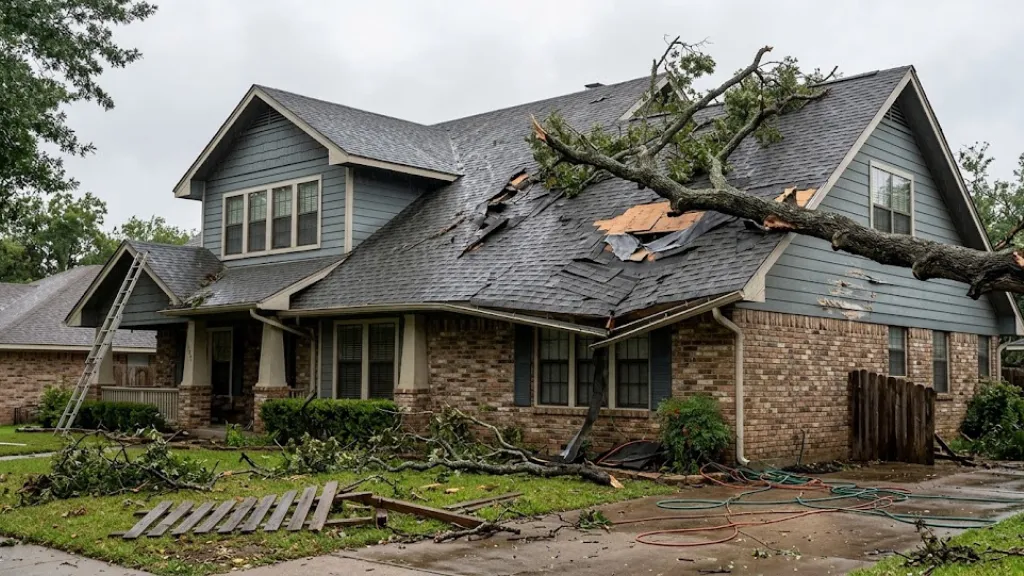
Severe thunderstorm fronts, high-velocity straight-line winds, and heavy hail strikes across DuPage County regularly cause sudden building envelope breaches. When atmospheric turbulence tears away asphalt shingle courses, fractures roof decking, or drops mature tree limbs onto residential structures, water intrusion starts immediately. Rain driven by strong wind rapidly saturates blown-in attic insulation, seeps into ceiling drywall assemblies, and weakens load-bearing timber trusses. Emergency roof tarping provides a vital temporary weather barrier that stabilizes compromised roof decks, halts active leaks, and prevents secondary mold colonization until permanent structural repairs occur. Executing durable temporary weatherproofing demands strict adherence to physical tensioning mechanics, proper fastener distribution, and comprehensive safety protocols.
Local Weather Hazards and Roof Envelope Vulnerabilities
DuPage County properties face distinct seasonal meteorological threats due to Midwestern continental weather patterns. Spring microbursts and severe summer convective storm cells frequently generate wind gusts exceeding 60 miles per hour, creating powerful aerodynamic uplift forces along roof perimeters.
Roof eaves, rake edges, and ridge caps experience the most severe wind pressure differentials during storm events. As wind sweeps over a roof peak, it creates a low-pressure vacuum that pulls upward on loose shingle edges. Once a single course of shingles lifts, wind drives rain directly underneath the underlayment, rapidly peeling back large sections of exposed plywood decking. Property owners seeking Wheaton storm damage restoration services frequently encounter torn rake edges, cracked ridge boards, and compromised attic vents requiring immediate physical containment.
| Storm Hazard Profile | Primary Structural Impact | Secondary Material Risk | Recommended Emergency Action |
| Straight-Line Winds | Lifted shingle tabs, torn ridge caps, exposed OSB sheathing | Direct rain saturation into attic insulation and ceiling framing | Perimeter batten-anchored tarp deployment over ridge peak |
| Severe Hail Impacts | Punctured asphalt mats, dislodged protective granules | Micro-cracks causing gradual water seepage into plywood decking | Full-slope protective membrane coverage over fractured courses |
| Impact from Tree Limbs | Broken roof trusses, split decking, crushed soffit lines | Open-air structural voids causing interior flooding and ceiling collapse | Heavy-duty exterior framing combined with structural tarping |
| Winter Ice Damming | Sub-shingle water backing, lifted eaves, damaged gutters | Saturated wall cavities, rotting fascias, and interior ceiling failure | Eave membrane application and temporary drainage channel clearing |
Winter weather introduces secondary envelope hazards through freezing thaw cycles. Ice dams forming along unheated roof eaves trap melting snow runoff, forcing liquid water upward beneath intact shingle courses. This standing water saturates structural sheathing, expanding timber fibers and destroying fastener holding capacity.
In cases where storm damage extends to shattered window openings, torn siding, or compromised entryways, executing an emergency window board-up in Downers Grove alongside temporary roof seals keeps the entire structural shell secure against wind-driven precipitation.
Engineering Principles of Temporary Tarp Securing
Securing a temporary weather membrane requires precise mechanical anchoring. Simply laying plastic over a damaged roof deck and nailing down corners guarantees failure; wind will catch loose edges, tearing the plastic apart and damaging remaining shingles.
A proper emergency tarp installation relies on continuous tension, edge anchoring, and proper water-shedding alignment. The tarp must extend over the roof peak to prevent water from running under the top edge. Fastening requires anchor boards, typically 1×2 or 2×4 dimensional lumber, wrapped into the tarp material to distribute tension evenly along the edge rather than relying on individual metal grommets, which tear under load.
- Ridge Overlap Alignment: The upper edge of the tarp must cross over the roof ridge line by a minimum of two feet and anchor securely onto the undamaged slope to keep water from creeping underneath.
- Lateral Edge Anchoring: Vertical sides must roll tightly around anchor boards and mount flush against undamaged shingles, forming sealed vertical drainage channels.
- Eave Runoff Discharge: The bottom tarp edge must extend past the eave or gutter line, allowing collected water to drain cleanly away from exterior walls.
Homeowners managing property recovery across Downers Grove storm damage restoration sectors often face complex wind turbulence along elevated suburban ridges. To review official flood plain maps, building safety codes, and local environmental standards, property owners can consult resources provided by the DuPage County Stormwater Management Department.
Step-by-Step Technical Tarping Protocol
Executing temporary roof stabilization requires heavy-duty materials and methodical execution. Light-duty poly tarps degrade quickly under ultraviolet sunlight and tear easily in mild winds. Commercial stabilization requires 6-mil or thicker woven polyethylene membranes treated for high UV resistance.
1. Safety Clearance and Ground Inspection
Never climb onto a roof during active rainfall, high winds, or lightning storms. Inspect the ground perimeter for downed power lines or low-hanging electrical service drops before placing access ladders. Examine the ceiling and attic framing indoors to confirm load-bearing rafters have not fractured.
2. Substrate Preparation and Debris Removal
Clear broken shingle debris, loose nails, and tree branches from the damaged area. Drive protruding roofing nails flush into the plywood deck to prevent them from puncturing the tarp. Inspect exposed wood sheathing for structural soft spots or rot.
3. Membrane Sizing and Positioning
Measure the damaged zone and add at least three feet of coverage on all sides. Pull the tarp tightly across the damaged roof deck, eliminating wrinkles and sag pockets where rainwater could collect. Ensure the top edge extends fully over the roof peak.
4. Batten Strip Fastening Sequence
Wrap the outer edges of the tarp around 2×4 or 1×2 wooden anchor strips at least two full rotations. Fasten these anchor strips directly through the tarp into the roof deck using 3-inch exterior wood screws spaced 10 to 12 inches apart.
- Membrane Grade: Minimum 6-mil, high-density woven polyethylene with reinforced corners.
- Fastener Hardware: 3-inch exterior deck screws with neoprene sealing washers.
- Batten Lumber: Kiln-dried 1×2 or 2×4 spruce-pine-fir (SPF) dimensional lumber.
5. Perimeter Flashing and Top Sealing
Apply a continuous bead of polyurethane roof sealant or liquid asphalt flashing cement along the top edge of the upper anchor board. This secondary seal stops wind-driven rain from creeping over the wood strip during heavy downpours.
For severe structural damage involving fractured roof trusses, crushed gables, or extensive tile breakage, property owners utilizing Wheaton roof tarping and board-up services can prevent ongoing ceiling saturation, framing rot, and interior flooding.
Fall Hazards and Critical Safety Warnings
Walking on a wet, steep, or storm-damaged roof carries extreme risk of severe fall injuries. Steep roof pitches, loose shingle granules, and sudden wind gusts make DIY roof repairs exceptionally dangerous for non-professionals.
- Avoid Slippery Roof Surfaces: Wet shingles and synthetic underlayment become extremely slick, offering virtually no foot traction.
- Watch for Hidden Decking Collapse: Water-logged OSB or plywood sheathing can give way under human weight, causing dangerous falls through ceiling joists.
- Maintain Overhead Power Line Clearance: Metal extension ladders, tools, and wet ropes conduct electricity. Keep all equipment at least 10 feet away from overhead electrical lines.
- Use Certified Fall-Arrest Systems: Professional restoration crews use full-body safety harnesses, shock-absorbing lanyards, and anchored vertical lifelines. Never step onto a pitched roof without proper safety rigging.
Property owners should prioritize ground-level documentation and professional emergency stabilization over attempting roof access themselves.
Immediate Property Owner Action Plan
Managing post-storm recovery efficiently requires structured, safe actions immediately following building damage.
- Document Exterior Damage From the Ground: Capture clear photos and video of missing shingles, damaged gutters, and fallen trees using camera zoom from safe ground locations.
- Protect Interior Living Spaces: Move furniture, electronics, and rugs away from active leaks. Place collection buckets and heavy plastic sheeting beneath dripping ceiling areas.
- Notify Your Insurance Carrier: File a formal claim immediately. Retain all receipts for temporary stabilization materials and professional emergency mitigation work.
- Relieve Trapped Ceiling Water: Saturated ceiling drywall can collapse without warning. If drywall bulges downward under water weight, carefully puncture a small drain hole in the center to release trapped water into a bucket.
- Secure Professional Emergency Assistance: Connect with independent local specialists equipped with ladder stabilizers, commercial rigging gear, and heavy-duty tarping supplies.
Taking organized, prompt steps prevents secondary ceiling collapse, protects interior property, and controls overall repair costs. For structural storm damage affecting residential or commercial properties across Eastern DuPage sectors, securing prompt access to Lombard storm damage restoration resources helps prevent ongoing water saturation and structural degradation.
Systematic temporary containment halts active water intrusion, protects building framework, and preserves insurance claim parameters. Accessing prompt assistance through an established emergency storm damage restoration network connects property owners with independent local professionals equipped to stabilize compromised roof structures safely.