Combustion byproducts from residential fires release complex hydrocarbon chains, liquid tars, and fine particulates that instantly bond to surrounding structural materials across DuPage County properties. When organic compounds burn, microscopic carbon particles aerosolize and penetrate deeply into porous drywall, subflooring, and timber framing. Conventional surface washing fails to eliminate these lingering smells because thermal expansion during a fire forces sub-micron combustion gases deep into structural framing assemblies. Eliminating persistent smoke odor demands a systematic approach that neutralizes volatile organic compounds (VOCs) at the molecular level rather than attempting to mask them with topical deodorizer sprays.
Chemical Properties and Physics of Smoke Deposits
Smoke contamination varies significantly depending on fuel sources, oxygen availability, and combustion temperatures during a fire incident. Fast-burning wood and paper fires under high-oxygen conditions produce coarse, dry carbon soot that settles over horizontal surfaces as a fine black powder. While dry carbon soot smudges easily when wiped with water or household cleaners, it can be safely lifted from exposed surfaces using specialized dry chem-sponges and industrial high-efficiency particulate air (HEPA) vacuum filtration systems. Property owners coordinating Wheaton fire damage restoration services frequently observe distinct contamination profiles across different living zones based on structural ventilation and fuel sources.
Synthetics, plastics, and petroleum-based building components produce sticky, yellow-brown liquid smoke residues when burned under low-oxygen, smoldering conditions. These residues contain high concentrations of acidic liquid tars that chemically etch gloss paints, metal fixtures, and glass within 24 to 48 hours if left untreated. Residential claims involving Downers Grove kitchen grease fire cleanup demonstrate how protein films and liquid lipid deposits coat kitchen cabinets, ceiling finishes, and adjoining drywall without leaving heavy black soot trails behind. Despite its subtle appearance, protein soot emits a powerful, rancid odor that rapidly degrades indoor air quality and requires specialized solvent degreasers to dissolve the protein matrix before thermal oxidation can begin.
| Residue Classification | Fuel Source Profile | Surface Behavior | Primary Remediation Method |
| Dry Carbon Soot | Natural wood, paper, natural fiber textiles | Fine, dry black powder; smudges if wet | HEPA vacuuming, vulcanized dry chem-sponge wiping |
| Wet Synthetic Residue | Plastics, rubber, polyurethane foam, carpet pads | Sticky, smeary yellow-brown film; highly acidic | Heavy-duty alkaline degreasers, solvent washing |
| Protein Smoke Residue | Cooking oils, animal fats, meats | Virtually invisible; pungent rancid grease smell | Enzymatic breakdown cleaners, deep thermal oxidation |
| Fuel Oil Puff-Back | Incomplete oil burner combustion | Dense, greasy aerosolized soot coating entire home | Lipophilic solvent washing, complete HVAC scrubbing |
Managing post-fire structural risks requires immediate physical intervention to prevent long-term material degradation. Property owners seeking specialized smoke odor removal in Wheaton, IL can establish negative pressure containment to prevent fine particulates from migrating into unburned residential wings.
Structural Ventilation Patterns and Local Environmental Factors
Interior layout variations across DuPage County properties strongly influence how smoke particles migrate during a fire event. Historic lath-and-plaster homes, multi-story colonials, and modern open-concept residences each present unique airflow dynamics.
During cold Midwestern winters, the stack effect significantly accelerates vertical smoke migration throughout residential buildings. As heated air inside a structure rises toward upper levels and attic spaces, it creates a negative pressure zone on lower floors. This pressure differential pulls aerosolized soot upward through vertical pipe chases, electrical wire runs, and wall stud cavities. Consequently, heavy smoke deposits frequently collect in upper-story attic insulation and roof trusses even when the original fire was confined to a basement or ground-floor kitchen.
- Basement / Ignition Zone: High-temperature combustion generates concentrated smoke volume and creates upward thermal convection currents.
- Main & Upper Living Areas: Rising warm air carries aerosolized VOCs through vertical utility chases and interior open-concept stairwells.
- Attic Space & Roof Trusses: Thermal stack forces deposit heavy soot concentrations in blown-in cellulose and fiberglass insulation.
Summer weather conditions introduce humidity-driven challenges to deodorization efforts. High ambient relative humidity causes porous wood framing, drywall paper, and unsealed masonry to absorb atmospheric moisture and expand. This expansion traps gas-phase VOCs deep within the cellular structure of structural timbers. As ambient temperatures fluctuate throughout summer months, these trapped gases continually off-gas into living areas, causing burnt odors to re-emerge long after initial surface cleaning appears complete.
Homeowners managing structural fire recovery across Downers Grove fire damage restoration sectors often contend with localized micro-climate moisture retention along low-lying drainage basins. To ensure structural restoration aligns with regional safety guidelines and municipal building codes, property owners can consult official regulatory resources through the DuPage County Building and Zoning Department.
Technical Neutralization and Odor Removal Protocols
Eliminating stubborn smoke odors requires a disciplined, multi-stage remediation process designed to neutralize airborne gases and embedded surface particulates. Applying masking sprays or household air fresheners merely covers up unpleasant smells temporarily without breaking down the underlying chemical bonds. Professional restoration relies on molecular oxidation, thermal vapor distribution, and mechanical air filtration.
1. Negative Air Containment and Particulate Extraction
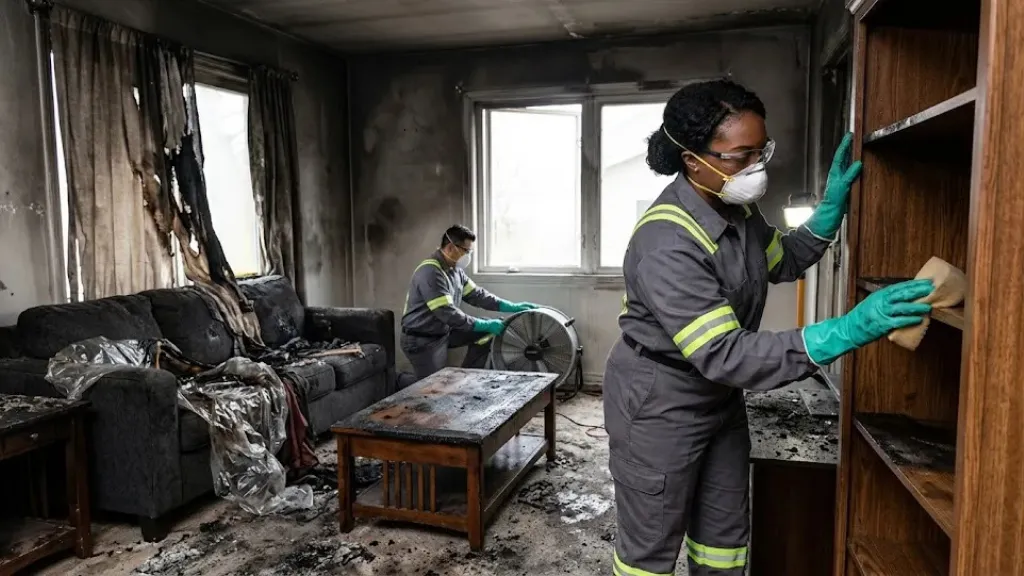
Before applying chemical neutralization agents, the affected work area must be isolated to prevent soot transfer into clean areas of the home. Technicians install heavy-duty 6-mil polyethylene containment barriers equipped with zippered entry portals. Industrial air scrubbers fitted with three-stage filtration, a primary pre-filter, a secondary pleated filter, and a thick activated carbon stage, are configured to maintain negative air pressure. These units exhaust purified air outdoors while continuously pulling airborne carbon particles and gas-phase VOCs out of the indoor environment.
2. Physical Decontamination and Chemical Washing
Gas-phase oxidation treatments must always be preceded by thorough physical cleaning. Applying thermal deodorizing fogs or ozone over uncleaned soot traps volatile organic compounds beneath a layer of carbon, rendering subsequent gas treatments ineffective.
- Dry Surface Remediation: Industrial HEPA vacuums extract loose soot from structural framing, exposed ceiling joists, and brick fireplaces. Rubberized dry chem-sponges lift dry carbon soot from painted drywall without liquid, preventing carbon pigments from washing deeper into the wall substrate.
- Wet Surface Remediation: Synthetic and protein residues require heavy-duty alkaline cleaning agents enriched with surfactant degreasers. Technicians wipe surfaces systematically from top to bottom, changing rinse water frequently to prevent cross-contaminating cleaned building components.
3. Thermal Fogging and Deep Micro-Droplet Penetration
Thermal fogging utilizes a heated petroleum- or water-based deodorizing compound to produce a dense, fine mist. The droplets created range from 0.5 to 2 microns in diameter, matching the physical size of actual combustion smoke particles. Because thermal fog replicates the physical movement of natural fire smoke, it penetrates structural cracks, wall voids, and subfloors along identical thermal pathways. The chemical neutralizer binds directly with odor-causing VOC molecules, permanently altering their chemical structure upon contact to render them completely odorless.
4. Hydroxyl and Ozone Oxidation Technologies
For deep, persistent odor removal across large areas, advanced gas-phase oxidation equipment is deployed:
- Hydroxyl Generators: Using specific ultraviolet light wavelengths combined with ambient moisture, hydroxyl machines generate reactive oxygen radicals. These radicals break apart complex hydrocarbons, sulfur emissions, and VOC chains. Hydroxyl technology is safe to operate in occupied spaces and will not damage sensitive electronics, natural rubber, or interior vinyls.
- Ozone Generators: Ozone (O3) is an aggressive oxidative gas that dismantles carbon-chain odor molecules. Because high ozone concentrations are toxic to living organisms, ozone oxidation must be conducted in strictly unoccupied, fully sealed environments.
5. HVAC System Decontamination and Duct Encapsulation
Central HVAC networks rapidly distribute smoke particles throughout a home during a fire event. Return air ducts pull aerosolized soot into the furnace blower compartment, coating duct walls, trunk lines, and evaporator coils with acidic residues. Restoring contaminated HVAC systems requires mechanical agitation using pneumatic whip lines combined with continuous negative-pressure vacuum collection. Following mechanical cleaning, technicians fog an EPA-registered anti-microbial sealant inside duct runs to encapsulate remaining microscopic particles and prevent future off-gassing into living quarters.
Essential Step-by-Step Property Owner Safety Protocol
Managing fire damage recovery safely requires strict adherence to hazard mitigation steps immediately following an incident.
- Verify Structural Clearance: Never re-enter a fire-damaged structure until local fire officials or structural engineers formally confirm that the building envelope, floor joists, and roof decking are stable.
- Wear Personal Protective Equipment: Wear an N95 or P100 respirator mask, nitrile gloves, and eye protection when walking through soot-impacted spaces to prevent breathing fine carbon particulates and toxic synthetic ash.
- Isolate Electrical Circuits: Keep main breaker switches OFF if soot deposits cover electrical outlets, light fixtures, or junction boxes. Turning on power prematurely can trigger short circuits or secondary electrical fires.
- Avoid Improper Drywall Wiping: Do not attempt to scrub soot-covered walls with household liquid detergents. Water-based wiping on dry carbon soot smudges acidic pigments into drywall paper, making professional restoration significantly more complex.
- Protect HVAC Systems: Keep central heating and cooling units switched OFF until air ducts, blower assemblies, and filter banks are inspected and cleaned. Running contaminated systems circulates acidic soot throughout unaffected rooms.
Taking structured, immediate action prevents secondary chemical damage and reduces overall structural repair expenses. For structural fire losses requiring specialized equipment across Eastern DuPage districts, securing prompt access to Lombard fire damage restoration solutions helps prevent secondary smoke acid etching on interior finishes.
Systematic decontamination halts ongoing acidic etching, restores indoor air quality, and safeguards structural building elements over the long term. Accessing prompt assistance through an established emergency fire damage restoration and fire recovery network connects property owners with independent local professionals equipped to resolve severe smoke and soot challenges safely.