Basement Flooding Cleanup in Lombard, IL
Immediate high-volume liquid extraction and controlled atmospheric dehumidification are essential to stop migrating water before standing moisture saturates floor plates, finished wall assemblies, and structural timber framing. When storm runoff, rising water tables, or municipal drainage surcharges submerge lower levels, water quickly saturates porous building materials and creates immediate structural and microbial hazards. Securing professional Lombard water damage restoration services halts ongoing capillary wicking, protects foundation walls, and stabilizes indoor air quality. Rapid containment stops fungal spore germination, neutralizes biohazards, and pulls bound moisture from concrete slabs before permanent material decay occurs.
Local Emergency Water Damage Restoration – Available 24/7
Local Hydrogeology and Sub-Grade Flood Hazards in Lombard, IL
Properties across Lombard face significant basement flooding risks due to local terrain, dense clay soils, and heavy seasonal discharge into the East Branch DuPage River basin. Intense storm events rapidly saturate upper soil layers, generating extreme lateral hydrostatic pressure against concrete foundation walls and floor slabs.
The dense, slow-draining clay till prevalent across central DuPage County prevents natural groundwater infiltration, directing surface water straight toward residential foundation perimeters. When perimeter French drains silt up or sump pumps lose power during severe weather, water enters lower living spaces through wall cracks, floor seam expansion joints, and window wells.
Sub-grade water intrusion introduces severe material and health hazards depending on the contamination source:
- Sewer Line Backups (Category 3 Water): Heavy storm surcharges force raw sewage backward through basement floor drains, introducing dangerous enteric pathogens, bacteria, and chemical pollutants.
- Hydrostatic Seepage: Continuous groundwater head pressure forces moisture through microscopic concrete pores and masonry cold joints, dissolving mineral salts and causing chronic wall efflorescence.
- Sump Basin Overflows: Rapid pit inundation submerges basement furnaces, water heaters, and low-lying electrical runs, creating immediate fire, shock, and equipment failure risks.
- Trapped Sub-Floor Moisture: Water trapped beneath carpet padding, luxury vinyl tile (LVT), or sub-floor sleepers creates isolated high-humidity cavities that breed hidden mold within 24 to 48 hours.
Professional Technical Mitigation & Extraction Protocols
Eradicating basement flooding requires a systematic, multi-phase technical response designed to remove liquid volume, eliminate pathogens, and dry structural assemblies.
1. High-Volume Liquid Extraction
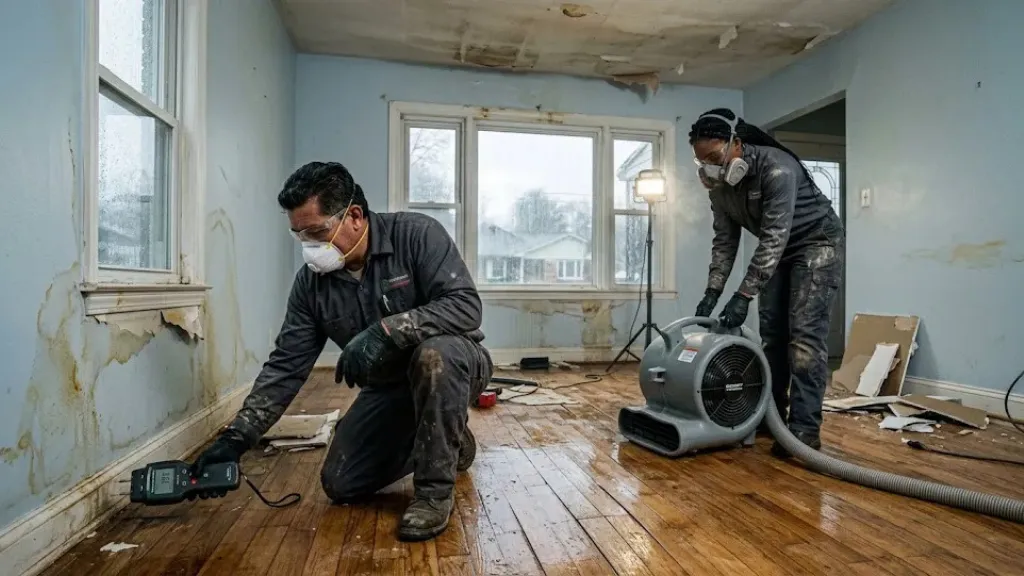
Independent specialists deploy heavy-duty truck-mounted vacuum units and submersible trash pumps to remove standing water rapidly. Weighted deep-extraction tools pull bound water out of saturated carpet fibers, underlayments, and porous concrete pores.
2. Contaminated Material Demolition & Structural Venting
Materials impacted by Category 2 or Category 3 water, such as saturated drywall, fiberglass insulation batts, and carpet padding, are removed under controlled conditions. Precision flood cuts are made 12 to 24 inches above the water line to expose wall cavities and allow direct airflow to wet structural studs.
3. Surface Decontamination & Antimicrobial Application
Exposed concrete slabs, floor plates, and wall framing are cleaned using HEPA vacuums and treated with EPA-registered broad-spectrum disinfectants and fungicides. This step neutralizes active bacteria and stops fungal growth.
4. Applied Structural Dehumidification & Monitoring
Commercial Low Grain Refrigeration (LGR) dehumidifiers and high-velocity axial air movers are positioned to establish aggressive vapor pressure differentials. Technicians monitor moisture content using moisture meters and thermo-hygrometers to ensure framing materials reach dry standards.
Emergency Inspection & Mitigation Matrix
| Flood Impact Zone | Primary Material Hazard | Specialized Equipment Applied | Technical Restoration Goal |
| Unfinished Concrete Slabs | Standing water, silt deposits, bacterial film development | Submersible trash pumps, auto-scrubbers, botanical biocides | Complete liquid extraction, surface decontamination, and deep slab drying |
| Finished Drywall & Framing | Wick-action absorption, stud cavity mold proliferation | Oscillating wall-cut tools, HEPA vacuums, air scrubbers | Cut-out removal of porous drywall, cavity sanitization, timber drying |
| Carpet & Underlayment | Delamination, pad saturation, backing rot | Weighted claw extractors, antimicrobial foggers | Complete pad removal, carpet extraction or disposal based on water category |
| HVAC & Utility Closets | Shorted blower motors, ductwork microbial growth | HEPA negative air machines, duct sanitation equipment | Mechanical inspection, internal duct decontamination, system drying |
Local Response Protocol & Action Steps
When basement flooding occurs, taking prompt initial steps helps reduce structural damage and simplifies the restoration process:
- Prioritize Electrical Safety: Never walk into a flooded basement if water touches outlets, power cords, or breaker panels. Shut off main electrical breakers from a dry upper floor if accessible.
- Isolate the Water Source: If flooding is caused by an internal plumbing rupture, turn off the main water shut-off valve immediately.
- Document Damage for Insurance: Photograph and video all standing water levels, structural impacts, and damaged belongings before items are moved.
- Move High-Value Items: Elevate dry belongings, furniture, and personal items out of the flood zone to prevent secondary wicking.
- Contact Emergency Mitigation Services: Connect with independent local specialists in Lombard equipped with industrial extraction gear, thermal imaging, and commercial drying equipment.
Connecting with a local emergency network ensures fast connection with local restoration specialists, protecting building foundations and restoring a safe indoor environment.