Sump Pump Failure Emergency Cleanup Downers Grove, IL
Immediate standing water extraction, sump pit sanitization, and commercial structural drying are required when a primary sump pump mechanical failure or storm-related power loss causes a basement pit overflow. Sump pit overflows push silt, heavy sediment, and groundwater pathogens across subterranean concrete slabs and interior framing. Property owners seeking Downers Grove water damage restoration services during an active pit breakdown need prompt extraction to halt moisture migration under wall baseplates, drywall cavities, and finished flooring assemblies.
When severe weather disrupts grid power or burns out an aging pump motor, rising groundwater quickly fills the basin beyond capacity. Rapid deployment of truck-mounted extraction units removes standing water from lower level surfaces before moisture wicks up wooden wall studs and structural support beams.
Local Emergency Water Damage Restoration – Available 24/7
Local Soil Mechanics & Subsurface Hazards in Downers Grove, IL
Subterranean water accumulation around Downers Grove properties is shaped by distinct topographic variations, ravine networks, and localized soil conditions.
- Steep Slope Elevation Drops & Ravine Runoff: Varied topography across central and northern Downers Grove channels heavy surface runoff directly toward residential foundations during high-intensity convective storms.
- St. Joseph Creek & Lacey Creek Drainage: Properties situated near the St. Joseph Creek and Lacey Creek watersheds face rapid water table surges during prolonged precipitation events, subjecting sump basins to continuous high-volume intake.
- Clay Soil Saturation: Dense clay subsoil layers retain surface water, building high lateral hydrostatic pressure against buried concrete walls and forcing groundwater into perimeter tile systems at peak rates.
- Summer Storm Power Interruption: Intense summer thunderstorm cells frequently trigger localized utility grid failures across DuPage County, disabling standard electric pumps when groundwater inflow is highest.
Professional Extraction, Pit Sanitization & Structural Drying Protocol
Clearing a sump pit failure involves a multi-stage technical process designed to extract standing water, decontaminate impacted surfaces, and dry subterranean materials completely.
Phase 1: High-Capacity Standing Water Removal
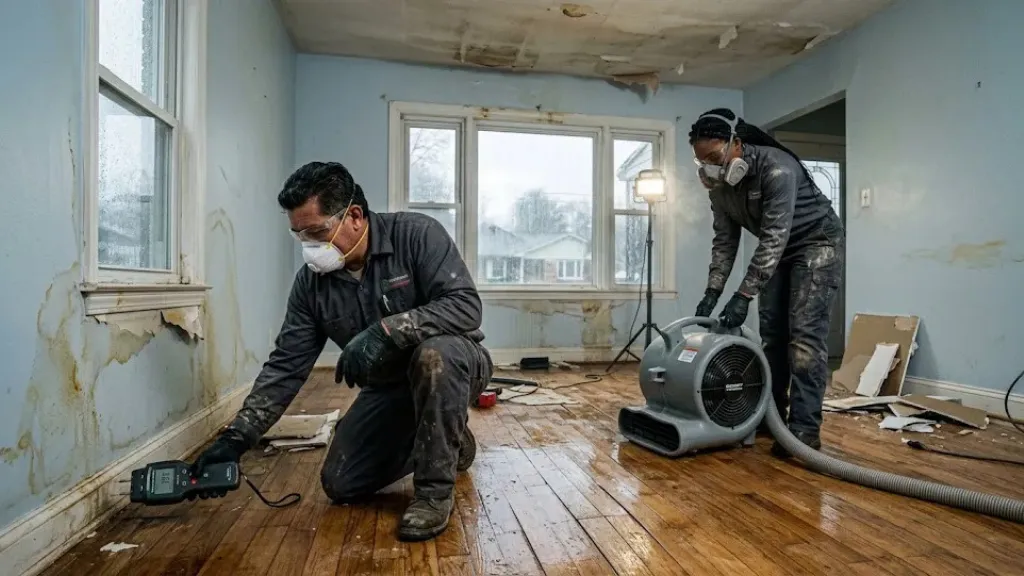
Heavy-duty submersible pumps and truck-mounted vacuum systems extract free-standing water off concrete floors, carpet padding, and storage areas to stop lateral saturation.
Phase 2: Mechanical Inspection & Pit Clearing
Independent local specialists inspect the float switch, check valve assembly, intake screen, and primary power source to identify the root cause of the failure while clearing accumulated debris from the basin.
Phase 3: EPA-Registered Antimicrobial Sanitization
Sump pit overflows carry environmental bacteria and soil particulates. Sanitizing the entire pit basin and surrounding slab areas with EPA-registered botanical antimicrobials eliminates bacteria and prevents persistent damp odors.
Phase 4: Structural Dehumidification & Air Movement
Low-grain refrigerant (LGR) dehumidifiers and high-velocity air movers are strategically placed to pull bound moisture out of concrete slabs, wall cavities, and wooden plates.
Emergency Inspection & Mitigation Checklist
| Mitigation Step | Technical Target | Primary Focus Area |
| Electrical Panel Check | Verify circuit breaker status and test dedicated outlets. | Main Breaker Box |
| Float Switch Check | Ensure mechanical float moves freely without touching pit walls. | Sump Pit Basin |
| Check Valve Testing | Confirm backflow prevention valve halts water return to basin. | Discharge Pipe Assembly |
| Moisture Boundary Mapping | Map hidden moisture migration behind lower wall assemblies. | Drywall & Sill Plates |
| Baseboard Removal | Vent trapped moisture inside interior wall cavity tracks. | Wall Bottom Plates |
Local Response Protocol & Action Steps
When an electric sump pump fails or a pit overflows in Downers Grove, taking structured action minimizes interior structural damage:
Initiate Prompt Local Response: Connect with a local Downers Grove emergency network to arrange fast standing water extraction, basin decontamination, and structural drying through independent local service providers.
Prioritize Electrical Safety: If standing water covers electrical outlets or utility connections, switch off power to the basement circuit at the main breaker box before entering the area.
Clear Belongings from the Basin Area: Move stored boxes, furniture, and valuables away from the overflowing pit to prevent further material ruin.
Avoid Manual Bucket Bailout: Bailing an overflowing pit with buckets during active high water table surges is ineffective and delays structural drying.