Kitchen Grease Fire Cleanup in Bolingbrook, IL
Targeted chemical solvent washing and thermal fogging are required to eliminate invisible protein smoke films and sticky lipid residues before rancid grease vapors set permanently into cabinetry, drywall, and exhaust ductwork. When high-temperature cooking oils ignite, they release a fine aerosolized mist of yellow-to-amber protein residue that adheres tenaciously to surrounding surfaces and penetrates unsealed building materials. Securing professional Bolingbrook fire damage restoration services halts ongoing chemical corrosion, prevents permanent structural staining, and neutralizes pervasive organic odor molecules. Immediate technical intervention breaks down stubborn grease binders, extracts micro-soot from porous surfaces, and seals affected wall cavities before airborne combustion byproducts spread into connected living areas.
Local Emergency Fire Damage Restoration – Available 24/7
Local Building Structures and Chemical Residue Risks in Bolingbrook, IL
Residential layouts across Bolingbrook, ranging from traditional multi-story homes in Winston Woods to modern single-family developments along Weber Road, frequently feature open-concept kitchens linked directly to central living spaces. This structural open airflow allows superheated grease vapors to migrate rapidly beyond the stove line, coating high-vaulted ceilings, upper soffits, and return air vents throughout the property.
Because grease fires burn at extreme temperatures without generating heavy black carbon soot, the resulting protein smoke residue is virtually invisible to the untrained eye. However, as this pungent film cools, it turns into a tacky varnish that corrodes metal fixtures, degrades paint coatings, and emits an intense, rancid odor when exposed to indoor humidity.
Kitchen grease fires present distinct technical and structural hazards across local homes:
- Protein Smoke Film Accumulation: Pervasive grease vapors coat cabinets, appliances, and walls in a sticky residue that cannot be removed with standard household cleaners and requires specialized alkaline degreasers.
- Exhaust Hood & HVAC Contamination: Thermal draft pulls vaporized lipids into range hood filters, cabinetry interiors, and return ductwork, turning forced-air heating systems into secondary odor distribution channels.
- Corrosive Etching on Metal & Glass: Acidic grease residues react chemically with chrome fixtures, stainless steel appliances, and window glass within hours, causing irreversible pitting if left untreated.
- Sub-Surface Cabinet Saturation: Liquid grease and fire-suppression residues seep behind base cabinets, counter seams, and flooring underlayment, creating hidden pockets of odor-emitting decay.
Professional Technical Mitigation & Cleaning Protocols
Restoring a property after a kitchen grease fire demands a specialized chemical cleaning regimen designed to emulsify organic lipids, clean hard surfaces, and deodorize structural materials.
1. Dry Soot Removal & Chemical Pre-Treatment
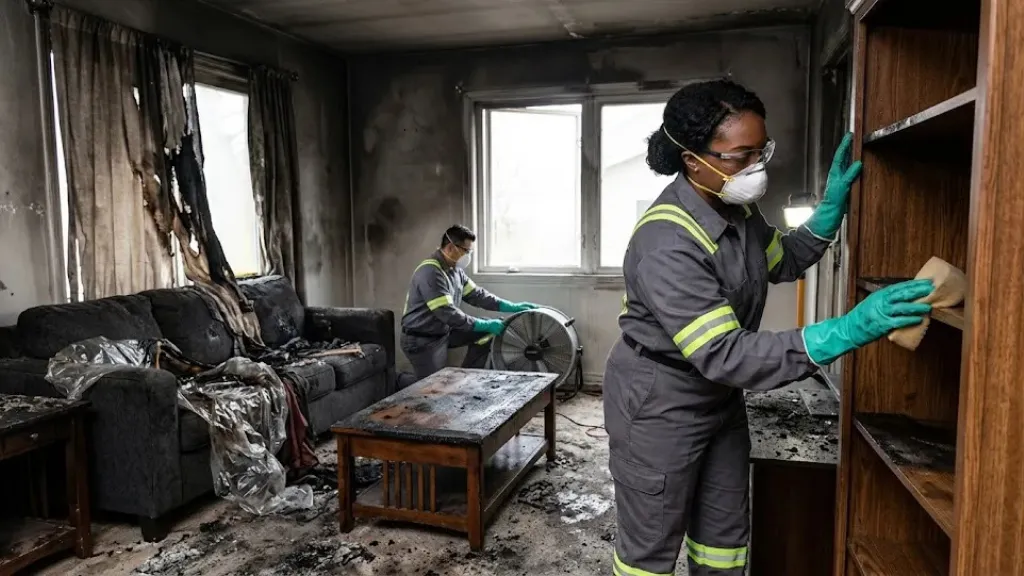
Independent specialists begin by using dry chemical sponges to lift loose soot particles without smearing tacky residues into porous paint or drywall. Targeted heavy-duty alkaline solvents are then applied to break the molecular bond of hardened grease films.
2. Wet Soot Washing & Substrate Decontamination
Enzymatic cleaning agents and degreasing washes are applied to non-porous surfaces, cabinets, counter undersides, and appliance housings. Technicians scrub impacted surfaces using non-abrasive pads to lift dissolved protein films without stripping base finishes.
3. Thermal Fogging & Hydroxyl Odor Neutralization
To eradicate embedded rancid grease smells, thermal fogging units heat oil-based counteractants into micro-droplets that match the exact penetration depth of original smoke vapors. Hydroxyl generators or ozone machines operate in sealed areas to break down complex odor molecules at a chemical level.
4. HEPA Air Scrubbing & HVAC Duct Washing
High-cfm air scrubbers fitted with true HEPA and activated carbon filter banks run continuously to capture airborne particles and organic compounds. Supply and return duct runs are scrubbed and sealed with odor-encapsulating primers.
Emergency Inspection & Mitigation Matrix
| Fire Impact Zone | Primary Material Hazard | Specialized Equipment Applied | Technical Restoration Goal |
| Kitchen Cabinetry & Soffits | Tacky protein film, varnish degradation, odor entrapment | Enzyme degreasers, chemical sponges, wood conditioners | Complete lipid film breakdown, surface decontamination, and finish preservation |
| Drywall & Ceiling Assemblies | Discoloration, porous smoke absorption, paint failure | Odor-sealing primers, alkaline washes, HEPA air scrubbers | Complete surface washing, odor encapsulation, and prep for repainting |
| Range Hoods & Ductwork | Sub-surface grease buildup, fire suppressant dust | Duct-cleaning whips, solvent degreasers, carbon filters | Degreasing internal hood cavities, duct sanitation, filter replacement |
| Stainless Steel & Fixtures | Acidic etching, surface pitting, heat discoloration | Neutralizing chemical rinses, metal polishes | Chemical neutralization, soot removal, and surface oxidation prevention |
Local Response Protocol & Action Steps
When a kitchen grease fire occurs, taking immediate initial steps helps minimize secondary damage and accelerates the restoration process:
- Avoid Water on Grease Fires: Never throw water on a grease fire or attempt to wipe down hot protein residues with water, as this spreads liquid grease deeper into wall materials.
- Isolate the Cooking Area: Close interior doors and shut down central HVAC heating or cooling systems to prevent grease-laden smoke from circulating into unimpacted bedrooms and living areas.
- Document Area Damage: Photograph and record all impacted cabinets, cooktops, counter surfaces, and personal property before moving items or wiping surfaces.
- Avoid Standard Household Cleaners: Do not attempt to scrub protein smoke with consumer dish soap or glass cleaners, as improper chemical mixtures can set smoke stains permanently.
- Contact Emergency Restoration Services: Connect with independent local specialists in Bolingbrook equipped with industrial degreasers, hydroxyl generators, and thermal fogging units.
Connecting with a local emergency network ensures fast connection with trained restoration specialists, protecting property finishes and restoring a clean, healthy indoor environment.